

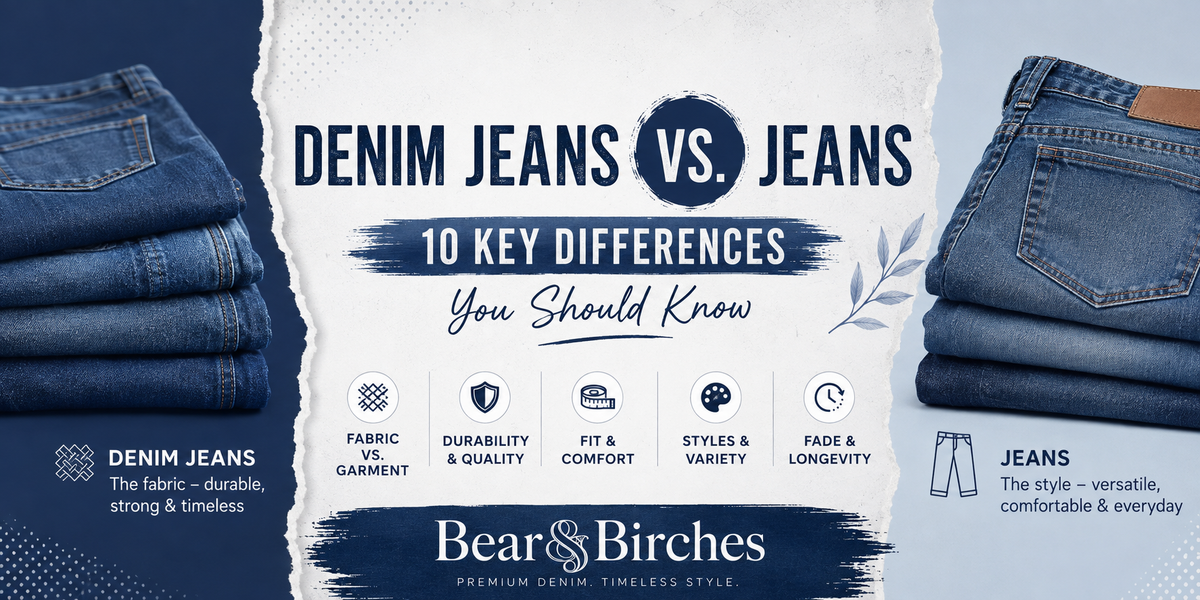
When shopping for a new pair of pants, you may often hear the terms “jeans” and “denim jeans” used interchangeably. While they are closely connected, they are not exactly the same thing.
Denim refers to the fabric, while jeans generally refer to the style of pants made from that fabric. Understanding the difference can help you choose the right pair based on comfort, durability, fit, style, and occasion.
Here are 10 important points to know about denim jeans vs. jeans.
1. Denim Is a Fabric, While Jeans Are a Garment
The biggest difference is simple.
Denim is a durable cotton twill fabric traditionally woven with colored yarn in one direction and white yarn in the other. Jeans are the trousers or pants made primarily from denim.
In other words, most traditional jeans are made from denim, but denim itself can also be used to create jackets, shirts, dresses, skirts, and other clothing.
2. Not Every Pair of Jeans Is Exactly the Same
Although most jeans are made with denim, the material can vary significantly.
Some pairs use:
-
100% cotton denim
-
Stretch denim with elastane
-
Cotton and polyester blends
-
Lightweight denim
-
Heavyweight premium denim
This is why two pairs of jeans can look similar but feel completely different when worn.
3. Denim Jeans Are Known for Durability
One of the main reasons denim jeans have remained popular for generations is their durability.
Quality denim is designed to handle regular wear and can become more comfortable over time. Premium options often feature stronger fabric construction, reinforced stitching, and better finishing.
If long-lasting quality is important, choosing well-made Men's Premium Denim Jeans can be a better investment than purchasing low-quality alternatives that lose their shape quickly.
4. Jeans Come in Many Different Fits
Modern jeans are available in a wide range of fits, including:
Slim Fit
A streamlined style that follows the natural shape of the legs without being extremely tight.
Straight Fit
A classic option with a consistent width from the thigh to the hem.
Relaxed Fit
Provides more room around the thighs and legs for a comfortable feel.
Skinny Fit
A closer-fitting style designed to create a more fitted appearance.
Wide-Leg Fit
A modern and comfortable silhouette with extra space through the legs.
The right fit depends on your body type, comfort preferences, and personal style.
5. Denim Weight Makes a Difference
Denim is available in different fabric weights.
Lightweight denim is usually softer and more breathable, making it suitable for warmer weather. Heavier denim often feels more structured and durable.
People looking for traditional, rugged jeans may prefer heavyweight denim, while lightweight or stretch options can offer greater comfort for everyday wear.
6. Stretch Jeans Offer More Flexibility
Traditional jeans were commonly made from 100% cotton, which provides a classic denim feel but limited flexibility.
Modern stretch jeans include materials such as elastane to provide additional movement. This makes them more comfortable for sitting, walking, traveling, and daily activities.
However, the amount of stretch should be balanced. Too much synthetic material may affect the classic look and durability of the jeans.
7. Denim Jeans Can Develop Unique Fades
High-quality denim often changes over time.
Areas that experience more friction, such as the knees, thighs, and pockets, may gradually develop natural fading. This gives each pair a unique appearance.
Dark wash and raw denim can develop particularly noticeable fade patterns with regular wear.
8. Jeans Can Be Styled for Different Occasions
Jeans are no longer limited to casual outfits.
A dark, well-fitted pair can work for:
-
Casual everyday wear
-
Smart-casual occasions
-
Dinner outings
-
Travel
-
Business-casual environments
-
Weekend events
For example, dark straight-fit jeans can be paired with a shirt and boots for a polished appearance, while relaxed denim works well with sneakers and a casual T-shirt.
9. Quality Depends on More Than the Fabric
Good denim alone does not automatically mean good jeans.
Other important factors include:
-
Stitching quality
-
Fabric thickness
-
Seam construction
-
Reinforced stress points
-
Zipper and button quality
-
Fit consistency
-
Washing and finishing techniques
Premium jeans usually pay greater attention to these details, helping the garment maintain its structure and appearance over time.
10. Premium Denim Is an Investment in Comfort and Style
Cheap jeans may initially seem like a good deal, but poor-quality fabric and weak stitching can lead to fading, tearing, or loss of shape.
A well-made pair of premium jeans can offer better durability, comfort, and long-term value. This is especially true when you choose a versatile fit and wash that can be styled with multiple outfits.
At Bear & Birches, the focus is on creating stylish and comfortable denim designed for everyday wear. A quality pair of jeans should not only look good when new—it should continue to feel and perform well over time.
Denim Jeans vs. Jeans: Quick Comparison
| Feature | Denim | Jeans |
|---|---|---|
| What is it? | A type of fabric | A garment or style of pants |
| Main material | Usually cotton twill | Usually made from denim |
| Other uses | Jackets, shirts, dresses, skirts | Primarily trousers |
| Durability | Depends on denim quality | Depends on fabric and construction |
| Variety | Different weights and finishes | Different fits, washes, and styles |
Final Thoughts
The difference between denim jeans vs. jeans is mainly about fabric and garment terminology. Denim is the material, while jeans are the clothing item traditionally made from that material.
However, when choosing the right pair, there is much more to consider. Fabric quality, weight, stretch, fit, stitching, and wash all affect how your jeans look and feel.
Whether you prefer slim, straight, relaxed, or wide-leg styles, investing in high-quality Bear & Birches premium denim can help you build a versatile wardrobe with jeans that offer comfort, durability, and timeless style.


Leave a comment
All comments are moderated before being published.
This site is protected by hCaptcha and the hCaptcha Privacy Policy and Terms of Service apply.